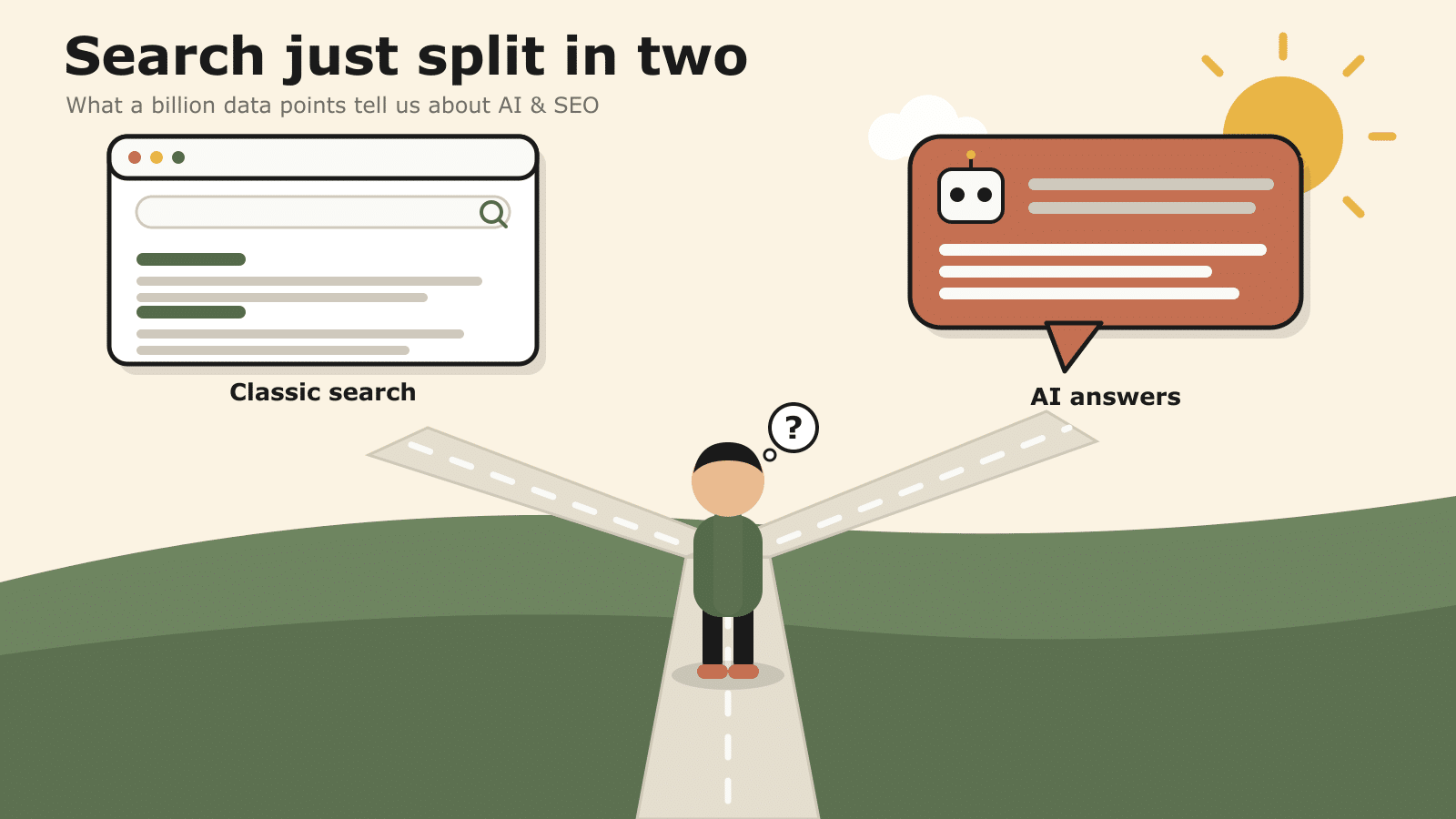
For twenty years, “being found online” meant one thing: ranking on Google. That’s no longer the whole story. Two recent pieces from Ahrefs. a summary of 14 studies covering more than a billion data points (shared on X), set alongside their long-running SEO statistics roundup; paint a picture of a search landscape that has quietly divided into two overlapping systems. One is the Google we all know. The other is the layer of AI-generated answers now sitting on top of it.
Here’s what it means in plain English, and why it matters even if you’ve never given SEO a second thought.
A quick jargon-buster
A few terms come up a lot:
- AI Overview — the AI-written summary that now appears at the top of many Google results.
- AI Mode — Google’s full chatbot-style version of search.
- Citation — when an AI answer credits or links to a source. Getting cited is the new “ranking.”
- Schema markup — hidden code on a page that labels its content for search engines.
The click is being squeezed — but not everywhere
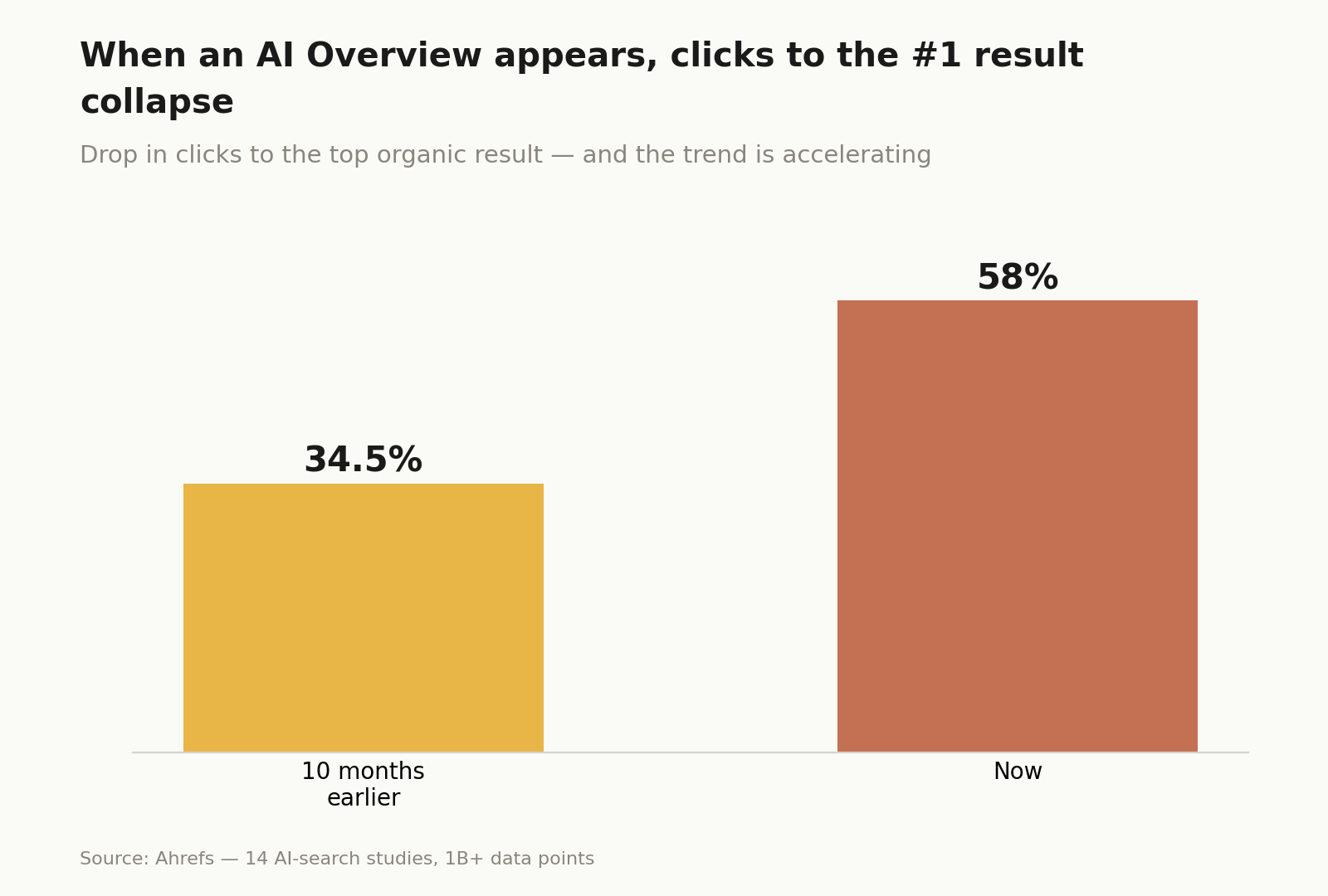
We’ve known for years that plenty of searches end without anyone clicking a result; Ahrefs’ statistics page notes that historically a majority of desktop searches were already “no-click.” AI Overviews are pouring fuel on that fire. When an AI Overview appears, clicks to the number-one result drop by 58% and that figure was just 34.5% only ten months earlier. The summary increasingly answers the question, so people never click through.
The reassuring part for most small businesses: this almost only happens on informational searches the “how do I”, “what is”, “why does” type questions. A remarkable 99.9% of AI Overviews show up on those. Searches where someone is ready to buy, looking for a specific company, or hunting for something local are still almost entirely free of AI Overviews. Shopping searches trigger one just 3.2% of the time. So if your most valuable pages are about a product or a local service, that traffic is for now largely untouched.
There are now two discovery systems, and they barely overlap
This is the finding that surprised me most. Nearly 28% of the pages ChatGPT cites most often have zero visibility in Google. They don’t rank at all, yet the AI keeps recommending them. Being great in Google no longer guarantees you exist in the AI’s world, and the reverse is just as true.
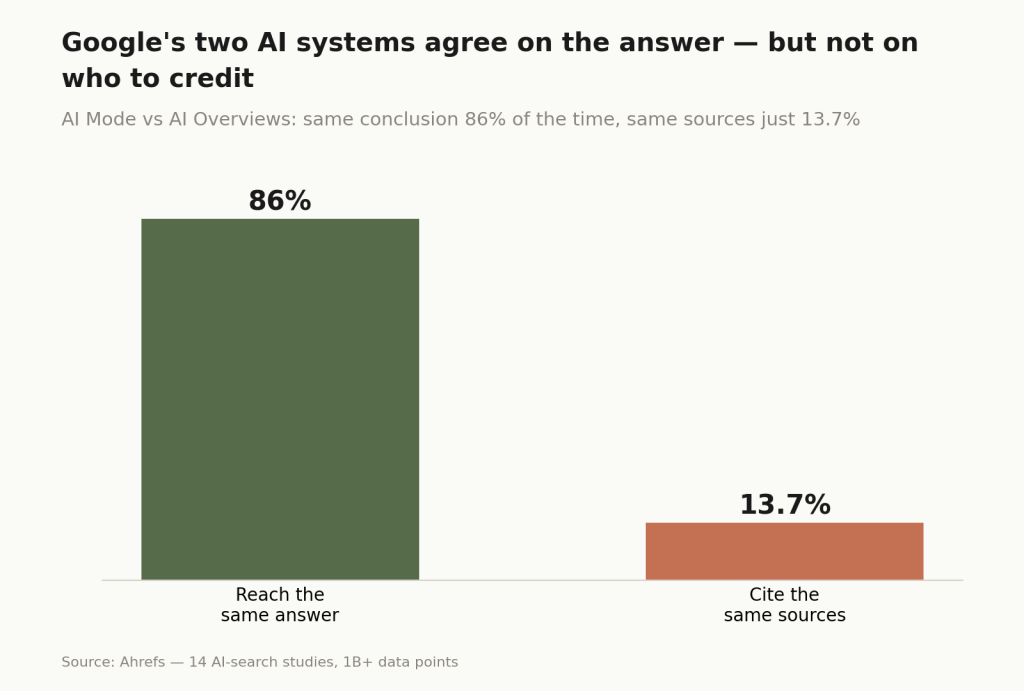
It gets stranger. Google’s own two systems don’t even agree with each other on sources. AI Mode and AI Overviews reach the same conclusion 86% of the time, but the sources they cite overlap only 13.7%. And those AI Overviews are restless, they reshuffle their wording and sources every couple of days, even though the underlying meaning of the answer barely changes.
You can’t “lock in” a spot the way you might with a traditional ranking.
Most of what AI quotes, you can’t control
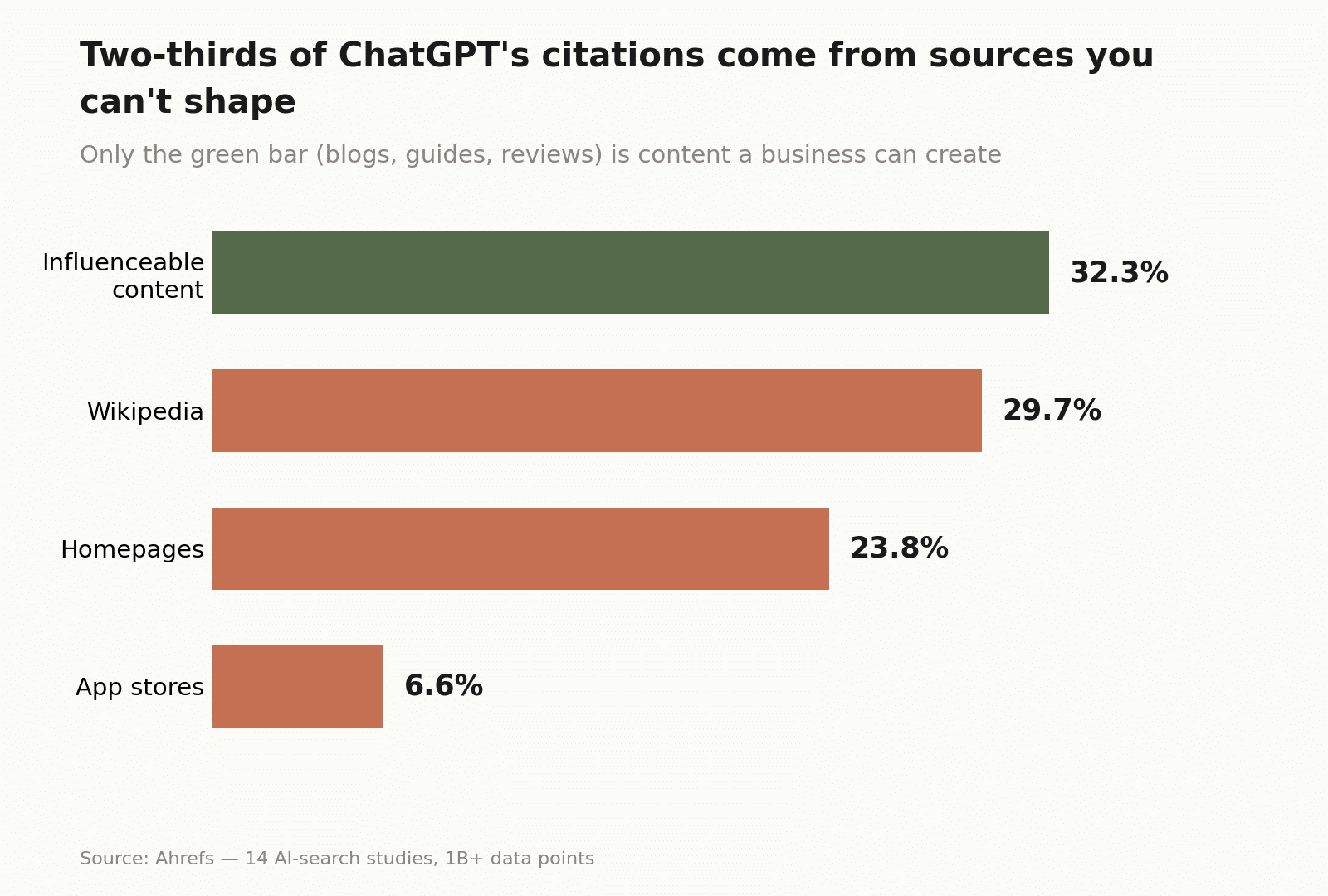
Roughly two-thirds of ChatGPT’s top citations come from places you simply can’t influence: Wikipedia (about 30%), companies’ own homepages, and app stores. Only around a third is the kind of content a business can actually create and shape, guides, reviews, news, and blog posts.
Within that influenceable third, one format dominates: the “best X” listicle (think “best double glazing companies in Bristol”). These make up nearly 44% of the page types ChatGPT cites. If you’ve ever wondered why those roundup articles are everywhere, now you know.
The technical shortcut everyone recommends? It did nothing.
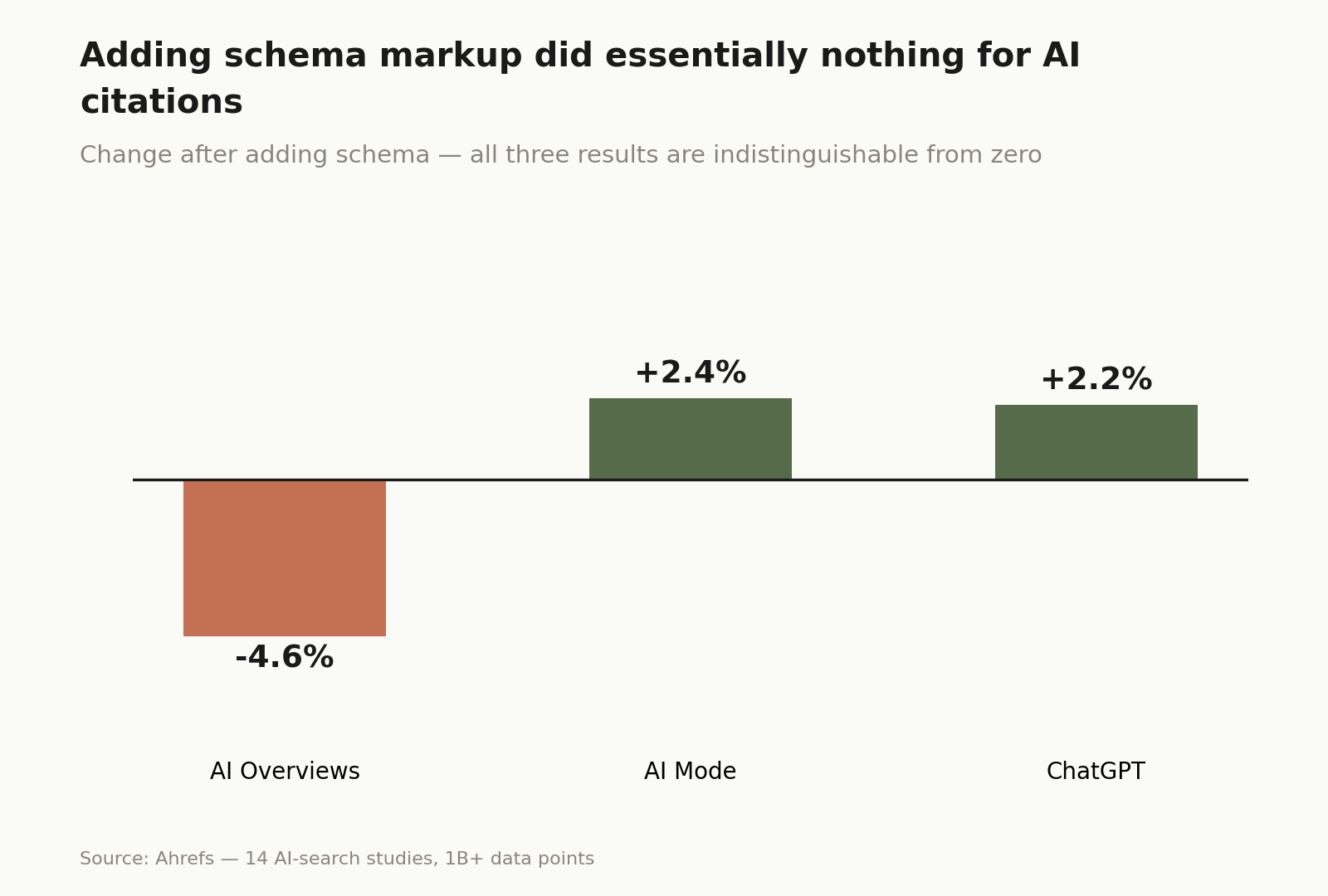
Here’s a myth quietly busted. Adding schema markup. Often sold as a must-do for AI visibility, had no meaningful effect on AI citations in Ahrefs’ testing. The differences were so small they were indistinguishable from random noise. Schema is still worth having for other reasons, but it is not a magic switch for getting quoted by AI.
So what did line up with AI visibility? Out of everything tested, backlinks, page count, domain authority, all the classic SEO signals the single strongest factor was YouTube mentions, by a wide margin. This held true for both Google’s and OpenAI’s tools. Given that YouTube is now estimated at over 14 billion videos, and that the vast majority of businesses already use video in some form, that’s a telling pointer about where attention is heading.
What this actually means for a small business
You don’t need to become an SEO to act on this. A few honest takeaways:
- Don’t panic about AI eating your traffic. If you sell products or local services, the searches that make you money are still mostly normal Google. Keep doing the fundamentals well.
- Stop chasing technical “hacks.” Schema and similar tweaks won’t buy you a place in AI answers. Genuine presence will.
- Brand mentions are the new currency. AI tends to repeat sources that are widely referenced. Wikipedia, established sites, and especially video. Being talked about matters more than fiddling with code.
- Take video seriously. A simple, helpful YouTube presence now does double duty: it reaches people directly and appears to be one of the strongest signals for showing up in AI answers.
- “Best of” content still earns its keep. If you want to be cited, useful comparison and roundup articles remain the format AI reaches for first.
The bigger picture
Put the two Ahrefs sources side by side and the shape of things becomes clear. The old rules of search haven’t vanished: Google still dominates, links still matter, and most pages still get very little traffic. But a second, less predictable layer now sits on top, with its own sources, its own favourites, and its own logic. The smart move isn’t to abandon what already works. It’s to build the kind of genuine, well-referenced, multi-format presence written and video that both systems reward.
Sources: Ahrefs’ summary of 14 AI-search studies (more than 1 billion data points, shared on X/Twitter) and Ahrefs’ 124 SEO Statistics roundup at ahrefs.com/blog/seo-statistics. The AI-search figures are recent; the broader SEO statistics reflect Ahrefs’ established baseline data.